

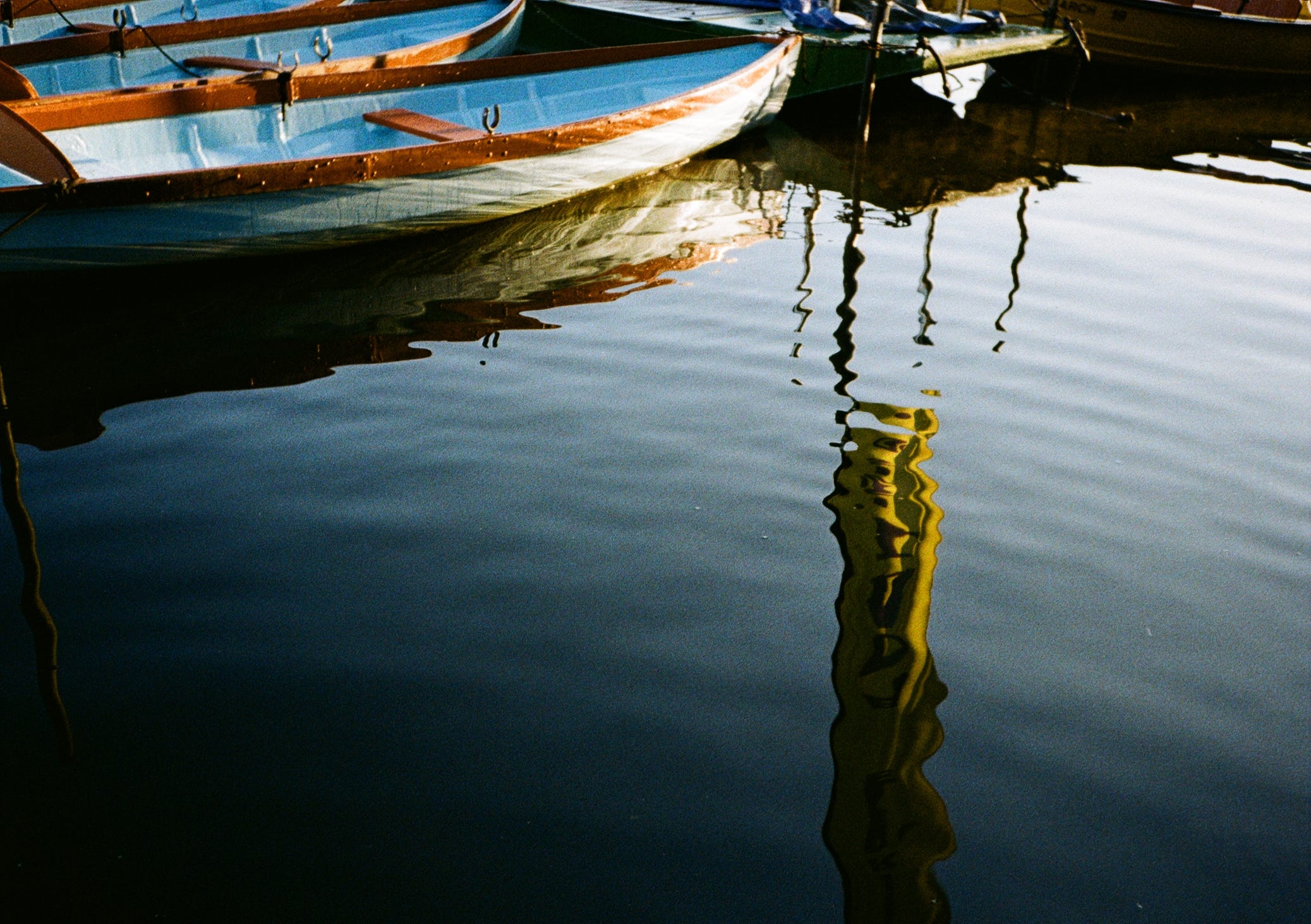
One day soon, I will fall in the river.
Before we go any further, I’ll explain. I live in a little two-bed-terrace with my wife, my cat, and my two-year-old son. As a freelance writer working from home, the second bedroom always used to be my office – until my son took up residence there, and now it belongs to him (squatters’ rights).
The house backs onto a river, and my wife and I were talking to the landlord one day about how our son had moved into the office. The landlord offhandedly offered me a mooring if I wanted to work from a boat. Work from a boat? What an amusing notion! How silly such a thing would be. We all laughed.
So anyway, now I work from a boat. It took a while to find it, buy it, transport it. It took longer still to make it a functioning office, but now I have a desk, a chair, a place to make tea and coffee, a small fridge for the milk. I have wifi and a log-burning stove. I see mallards and swans out the window, a cormorant or heron if I’m lucky. It’s peaceful in here when it rains.
It’s all just lovely, if somewhat antithetical to the process of actually working. Much of the time I hoped to use writing has been taken up by the process of looking after the boat. Much of the money I’ve earned working aboard it has gone back into mooring fees and maintenance. Most offices don’t have the potential to sink, nor do they produce the anxiety that comes with it. Nevertheless, a boat I have.
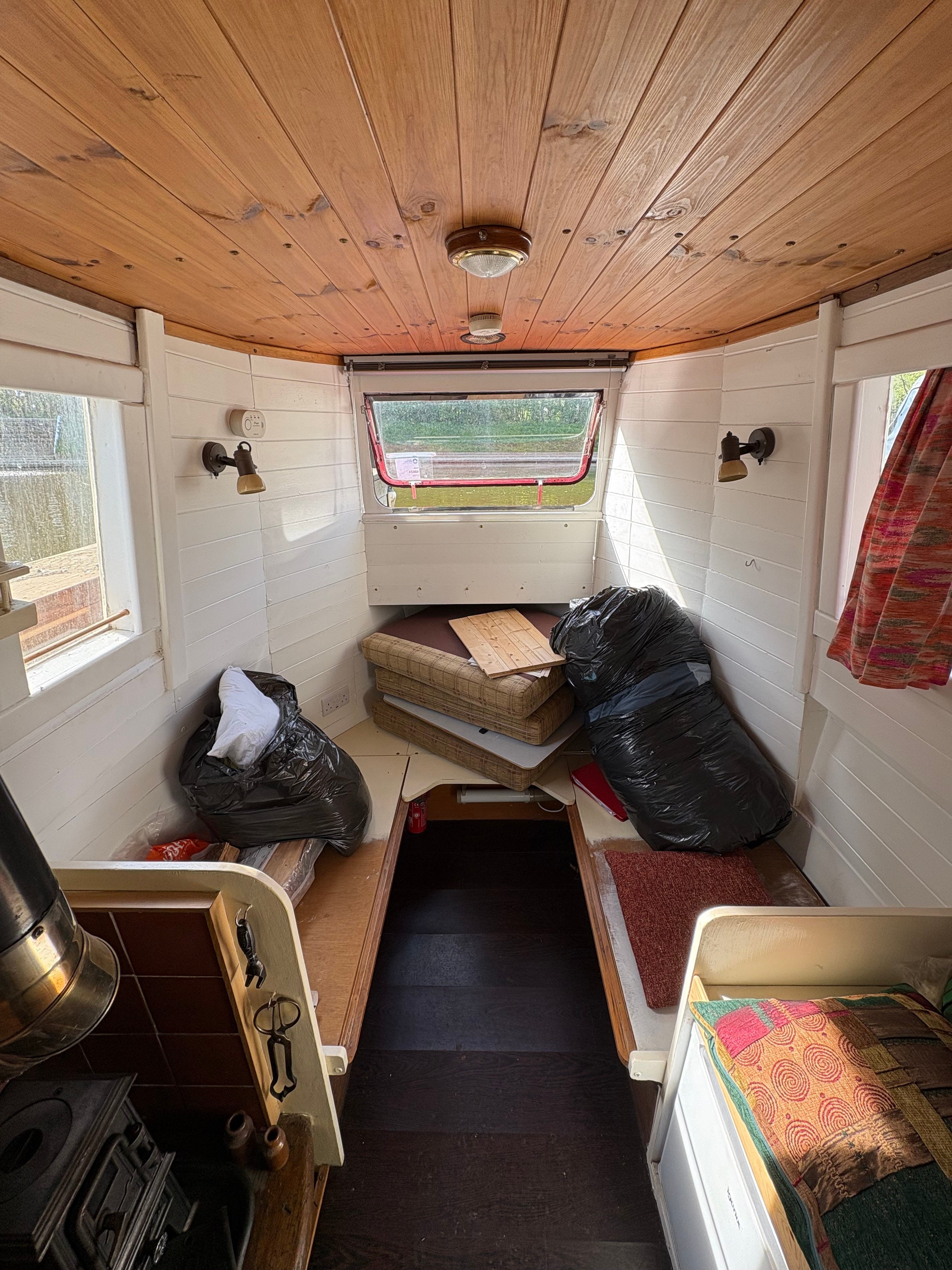
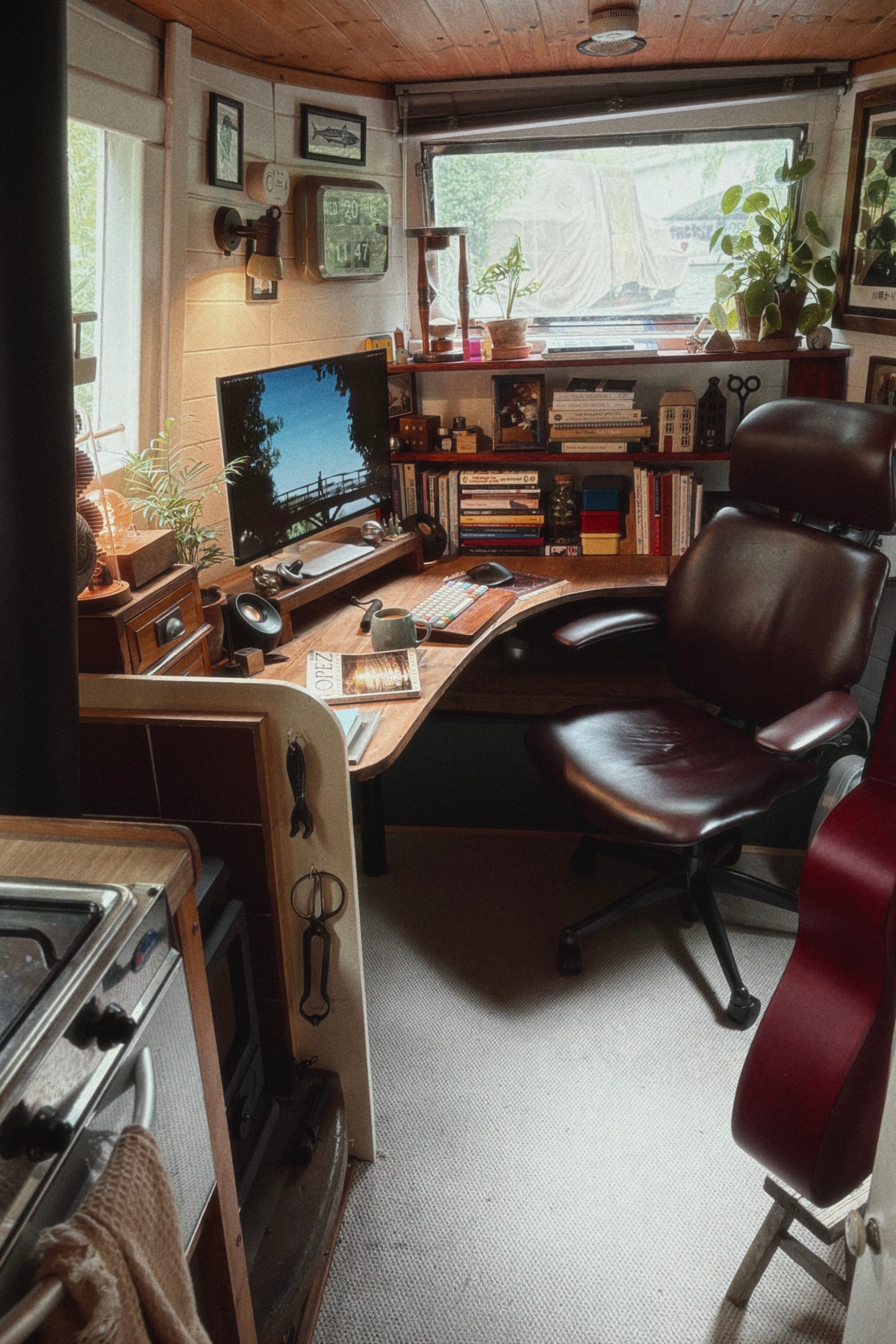
The step from the mooring onto the boat is a good couple of feet – not only down, but also across – and then I have to balance on a four-inch ledge (slippery when wet) as I unzip a canvas door, reach back to the bank for my laptop, and finally shimmy inside. It’s an awkward process, and the mooring has already claimed its first iPhone, which lies submerged to this day, forever lost to the silt of the riverbed. All of which is to say, one day soon, I will fall in the river.
And yet...
The genuine belief I will fall in the river is the very same thing that minimises its chances of happening. The certainty I’ll fall is the reason that I focus. The awareness I can be clumsy is exactly what makes me careful. And, on the flip side, believing I would never fall in the river could only increase my chances of it happening, because I wouldn’t take measures to prevent it.
There’s a French culinary phrase: mise en place, or ‘putting in place.’ It’s what you do when you prepare to cook, when you sort out the kitchen and organise what’s required ahead of time – after all, there’s little more frustrating than cooking in a messy kitchen. What I find helpful about that term is the importance it places on preparing the environment – the preparation is its own distinct part of the process.
And so, the best version of me (who occasionally rears his head) prepares for a morning’s writing the day before it begins. When I shut my laptop for the day, I close all software apart from my writing application, which I leave on, in full-screen mode, with the current project open. I schedule Do Not Disturb for the next morning and remove anything that threatens to claim my attention. This is mise en place for the laptop: clearing away the email clients and web browsers, and replacing them with only what’s needed for the task ahead. The next morning, when I sit down, there is nothing to distract me – or at least that’s the idea.
I was telling a friend about this routine. ‘Do you do that because you’re disciplined?’ he asked. I hadn’t considered this question before but I knew the answer immediately: no. And not just a normal no, but rather an absolutely-not-no, a no where the opposite is true. I don’t go through that process because I’m disciplined, but rather because I am not disciplined at all. I do it because I am terrible, because my capacity for faffing about is unmatched. I do it because I have wasted days of my life in a haze of fruitless clicks – between emails I need to reply to, the document I should be working on, and YouTube videos I never planned to watch. I cannot be trusted, and so I have learned to treat myself accordingly.
Ideas like these are far from new. The impact of environment on behaviour is well documented. At the very least, we understand notions of keeping our alarm clock on the other side of the room to force us out of bed in the morning, or setting our clocks a few minutes ahead to help us run on time. The way you arrange the world around you dictates your movement through it, and your surroundings are forever elbowing your behaviour in particular directions.
What then of falling in the river? The care I take to avoid it has less to do with the environment and more to do with a kind of mental mistrust of myself. I do this all the time. I genuinely presume I’ll burn the toast, which means I tend not to burn the toast. I always believe I will misplace my keys, so I generally know where they are. The constant awareness of my own potential for failure minimises its actual occurrence. I think of this as the Paradox of Mistrust: the less and less I trust myself, the more I can be trusted.
That’s interesting to me. Is there a meaningful distinction between keeping my poor discipline in check, and being disciplined in the first place? The outcome is certainly the same. Don’t get me wrong: I’m still an oaf, I still get distracted, and freelance life is a never-ending struggle against my default state of sitting on the sofa, playing video games, and eating too much chocolate, but trusting myself less has somehow led me to trust myself a little bit more.
My father will occasionally be told he has a remarkable memory, but he’s dismissive of this, annoyed even. ‘I haven’t got a good memory,’ he says. ‘I just write things down.’ But this is the Paradox of Mistrust, and somehow both things are true at the same time: he does not have a remarkable memory and yet he sort of does, because the acts of a man who believes he’ll forget are the acts of a man who remembers.
There’s an important caveat here though. I’m not offering this as advice; I’m only observing my own tendencies. Advice can often be packaged for the masses at the expense of the individual, and besides – as my good friend Joe once said – advice is only good if you agree with it.
So this may not be for you, and that’s fine. What I’m talking about here is, I suspect, entirely dependent on one’s own temperament. Excessive focus on the ways in which things might go wrong may not be such a good idea for a person prone to anxiety. Attempting to mitigate every possible misstep is not something you’d recommend to a person prone to neuroticism. But the key, for me at least, is to contain the awareness of potential failure to my own behaviour, my own actions. Tone is important too, because there’s a risk this practice descends into catastrophizing, self-loathing, or both. So the invitation here is not to panic or be unkind to yourself, but rather to identify a tendency and treat it as an entity: pop the behaviour in a bell jar. There’s an important, compassionate difference between being prone to idiocy, and identifying as an idiot.
It still seems a little negative though, right? A constant awareness of all the ways in which we might go wrong? That doesn’t sound like a pleasant mental space to occupy. But for me, there’s a kind of lightness to it, of meeting yourself where you are. The truly unpleasant mental state is the one where we trust ourselves to be better and must repeatedly deal with the frustration and disappointment of discovering we are not. Over time, that takes its toll.
And so I prefer this approach: I don’t presume I’ll be better, I presume I’ll be just as I am. This is a Taoist kind of vibe, aligning with a problem rather than battling against it, using acceptance as a means to free energy, and then spending that energy well.
So I expect to burn the toast. I know I’ll lose my keys. And when I do fall in the river, I’ll be ready.